Running a perfume vending machine business looks simple from the outside.
You buy the machine, place it in a good location, and wait for the income to come in.
But many beginners share the same question:
“Is the after-sales work difficult?”
The short answer: No.
Modern perfume vending machines are designed to be easy to maintain, and most issues are predictable and easy to prevent.
In this guide, you’ll learn what after-sales really looks like, what you should prepare for, and how to avoid the most common problems in 2026.
Do Perfume Vending Machines Require a Lot of After-Sales Work?
Not really. Most machines today use simple structures and stable control systems.
There are no complicated motors like snack machines, no heavy mechanical parts, and no compressors.
For most users, the main tasks are:
- refilling perfumes
- wiping the surface
- connecting the payment system
- adjusting the spray settings when needed
These tasks take only a few minutes and don’t require any technical background.
So even beginners can manage after-sales easily.
Common After-Sales Issues and How to Avoid Them
Even though perfume machines are easy to use, it’s still good to know the common issues you may have in advance.
The good part is: almost all of them are simple to solve.
Payment Problems (Card / NFC / Coins)
Payment systems are the first thing customers interact with, so the experience must be stable.
- Possible issues include:
- card reader losing signal
- coin acceptor not reading properly
- customer paying but spray not triggered
How to avoid:
- choose reliable cashless payment systems like Nayax
- use big brand for coin or cash system like ICT
- avoid areas with very weak mobile signal
- clean the nozzle regularly
A stable payment system reduces after-sales work by more than half.
Spray Volume or Nozzle Issues
Sometimes you might notice weaker spray or an inconsistent mist.
Typical reasons:
- the fragrance bottle is almost empty
- the nozzle needs a quick clean
- the fragrance is too thick
How to avoid:
- check the remaining level weekly
- use high-quality fragrance with stable viscosity
- clean the nozzle if the machine hasn’t been used for a certain long time
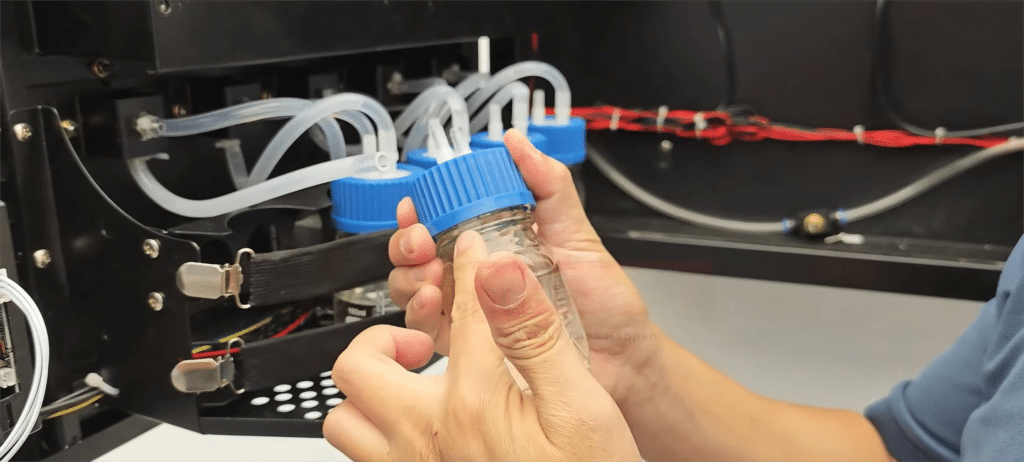
ALT: technician checking perfume vending machine nozzle.
For operators who want to understand fragrance stability and how different scent formulations behave inside machines, institutions like Osmothèque — the international perfume archive — offer helpful insights:
https://www.osmotheque.fr/en/
These steps take less than one minute.
Screen Errors
Standing perfume vending machines usually come with a display screen.
Most issues are minor and temporary.
Examples:
- touchscreen delay
- screen not waking up
- unstable power connection
How to avoid:
- use a stable power outlet
- restart the machine after long idle time
- check cables if the machine is moved
A good supplier will provide videos showing how to handle these cases.
How to Reduce After-Sales Problems from Day One
Here is what the most successful operators do:
1. Choose a stable cashless system
Many new operators underestimate this step.
A strong payment system reduces refunds, customer complaints, and downtime.
For example, Nayax is highly rated for global vending.
2. Use leak-proof perfume bottles
Bad bottles cause leaks, sticky surfaces, and repeated cleaning.
Use thick-wall bottles with tight caps.
3. Avoid direct sunlight
Strong light can affect sensors and heat the perfume.
Indoor or semi-indoor locations are best.
4. Check perfume levels regularly
Most operators check once a week.
Machines with “low fragrance alerts” make this even easier.
5. Use original accessories
Original caps, nozzles, and cables fit the machine perfectly.
They reduce troubleshooting time dramatically.
What Support Should a Good Supplier Provide?
Choosing the right supplier is as important as choosing the right location.
Here is what a good partner offers:
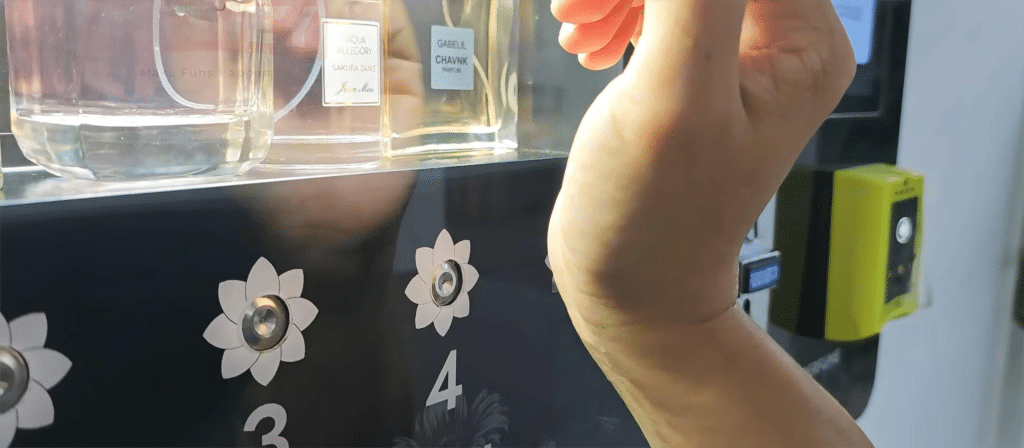
Clear manuals & video tutorials
Videos help solve 90% of issues quickly.
Many buyers prefer visual guides over written manuals.
Fast response time
Most suppliers reply within 24–48 hours.
This gives beginners confidence and reduces downtime.
Spare parts availability
Basic parts like nozzles, cables, and sensors should be easy to get.
Remote troubleshooting
Modern perfume machines come with internal test modes.
Your supplier can diagnose most issues through photos or a short video.
Warranty
A 1–2 year warranty is common in the vending industry.
Standing vs. Wall-Mounted: Which Has Less After-Sales Work?
Some beginners ask whether standing machines require more maintenance.
Here’s a simple comparison:
| Feature | Wall-Mounted Machine (P6) | Standing Machine (P8 / P10) |
| Installation | Drill & mount | Plug & place |
| Maintenance level | Very low | Low to medium |
| Components | Spray system | Spray + large screen |
| Common issues | Payment or spray | Screen + payment |
| Ideal users | Beginners | Medium–large operators |
In short:
Wall-mounted: simplest and lowest maintenance
Standing: more capacity & screen, slightly more after-sales steps
If you want to explore more details about machine types, you can also read our guide on How to Choose the Right Perfume Vending Machine.
How Much After-Sales Cost Should You Expect?
Very little.
Most operators spend almost nothing other than perfume refills.
You may expect occasional low-cost parts such as:
- replacement nozzle
- new perfume bottle caps
- coin acceptor cleaning
These are minor expenses and usually don’t affect ROI.
This is why perfume vending is becoming popular with first-time entrepreneurs — low effort, low maintenance, and fast return.
To understand how after-sales affects overall profit, our article Perfume Vending Machine Business Cost in 2025: Startup, Profits, ROI Breakdown provides real examples.
FAQ: Perfume Vending Machine After-Sales
Q1: Do perfume vending machines break easily?
No. The structure is simple, and the failure rate is very low.
Q2: Do I need technical experience to maintain the machine?
No. Most tasks take under one minute and require no tools.
Q3: What should I do if the machine doesn’t spray?
Check whether the perfume is empty or whether the nozzle needs cleaning.
Q4: Which locations require the least after-sales work?
Indoor areas, gyms, malls, and office buildings.