
Pokémon card vending machines can be profitable.
But “profitable” is the wrong question.
The real question most buyers should ask is:
In what situations does a Pokémon card vending machine make money — and in what situations does it quietly fail?
This article breaks down real operating numbers, cost structures, and location-based scenarios, so you can decide whether this business model actually fits your situation.
It is written for operators and buyers making real purchasing decisions — not for theoretical comparisons.
Why “Profitable” Is the Wrong Question
Pokémon trading cards have maintained a large and active player base for decades. According to official Pokémon TCG information(, demand for card products continues across retail, hobby, and casual consumer channels — but long-term popularity alone does not guarantee operator-level profitability.
Many articles stop at saying Pokémon vending machines are “high margin” or “low cost.”
That’s not wrong — but it’s incomplete.
Profit depends on three variables working together:
- Card sourcing cost
- Location quality (not just foot traffic)
- How the machine is operated over time
If any one of these breaks down, the machine can look busy — yet still underperform financially.
Real Cost Breakdown (Beyond Just Cards)
Market research on the global trading card industry shows continued growth in overall card sales. However, industry-level growth does not translate directly into predictable returns for individual vending machine operators, where costs, location, and operational effort vary widely.
Most people only calculate card cost.
That’s where mistakes begin.
A realistic cost structure usually includes:
Machine cost: one-time investment (varies by configuration)
Card inventory: bulk singles, booster packs, or mixed setups
Location cost: revenue share or placement agreement
Time cost: restocking, monitoring, handling refunds or complaints
Small losses: jammed cards, refunds, damaged stock
Cards may cost only a few cents each — but profit is decided by everything around them, not the card alone.
Revenue alone doesn’t determine ROI. Upfront investment and ongoing expenses play an equally important role. A more detailed breakdown of machine pricing and purchase considerations is covered in this guide on how to buy a Pokémon vending machine.
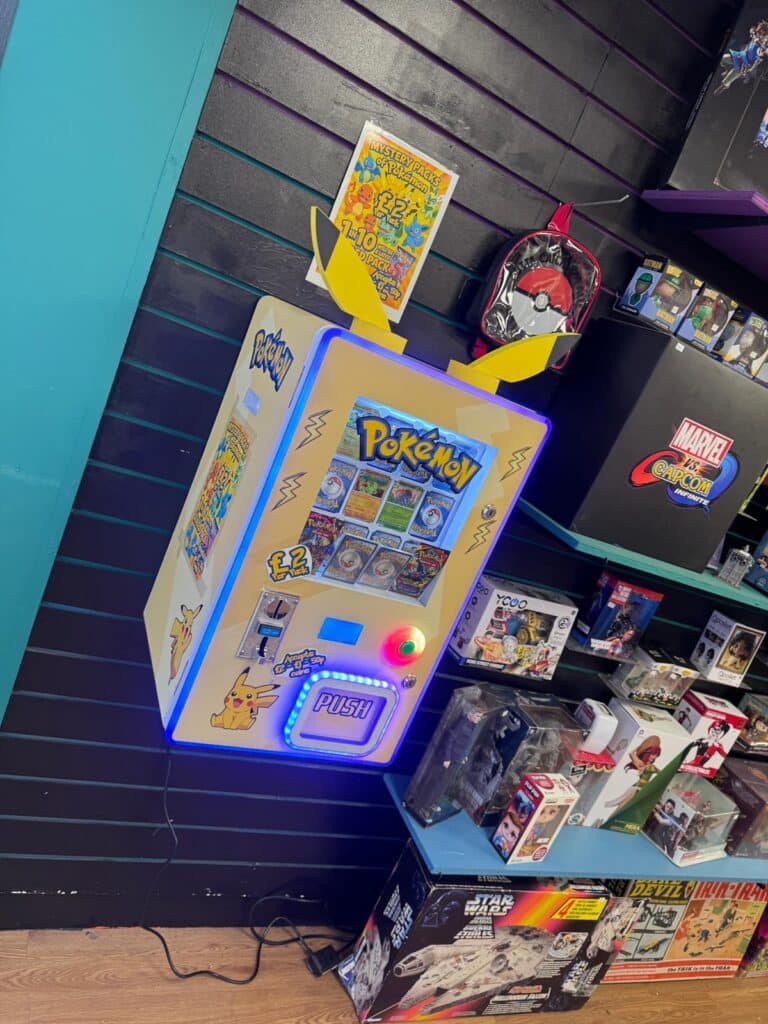
Revenue Scenarios: Low, Medium, and High Traffic Locations
Instead of averages, it’s more useful to look at scenarios.
Low-Traffic Locations
- Occasional impulse purchases
- Slower inventory movement
- Long return Cycle
Often not worth it unless rent is zero and cards are very cheap.
For operators looking for a deeper look at possible earnings ranges under different assumptions, we’ve broken down real-world examples in this article on how much you can make with a Pokémon card vending machine.
Medium-Traffic Locations
- Regular repeat customers
- Predictable daily sales
- Manageable restocking rhythm
This is where Pokémon vending machines perform most consistently.
High-Traffic Locations
- Fast inventory turnover
- Higher operational pressure
- More customer expectations
High upside, but only works if restocking and card supply are stable.
Traffic alone does not guarantee profit.
Traffic + audience match + card strategy does.
Choosing the right environment matters more than raw foot traffic. We explain common location patterns and evaluation tips in this guide on where to place a Pokémon vending machine.
Real Examples: What Actually Made the Difference
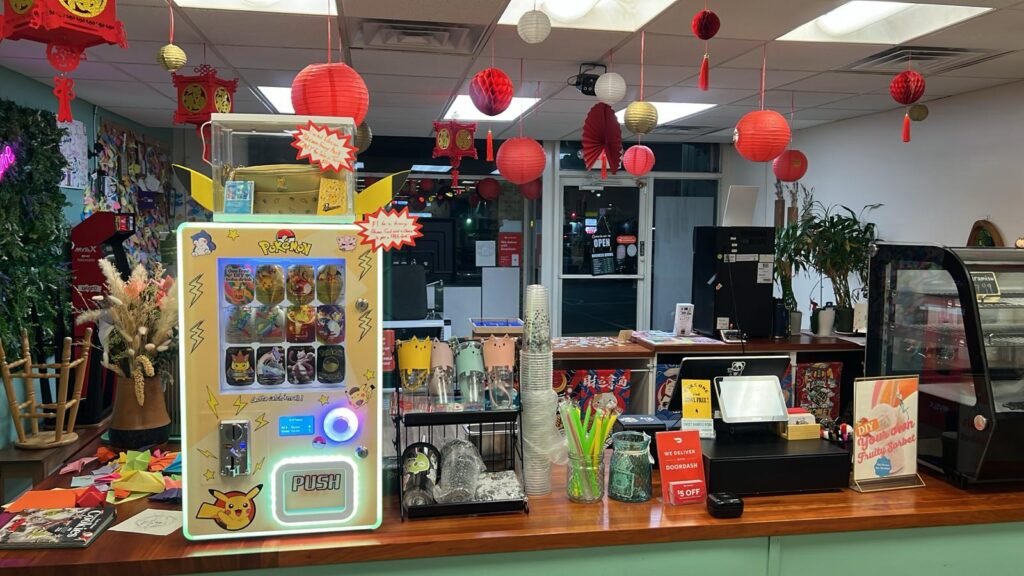
Milk Tea Shop (United States)
One operator placed a Pokémon vending machine inside a milk tea shop with a young customer base.
- What made it work was not foot traffic alone, but:
- Customers already waiting in line
- Repeat visits
- A simple promotional mechanic tied to card draws
If the same machine had been placed in a generic convenience store, results would likely have been very different.
Card Shop Entrance (Italy)
A card shop installed a Pokémon vending machine near its entrance and sold thousands of euros in cards within weeks.
Key factors:
- Customers already understood card value
- Strong trust in card authenticity
- Immediate transition from vending to in-store purchases
Without an existing Pokémon-focused audience, this setup would not have scaled the same way.
When Pokémon Vending Machines Do NOT Make Money
This is the part most sellers avoid — but it matters most.
Pokémon vending machines often underperform when:
- The location has traffic, but no Pokémon interest
- Cards are sourced inconsistently or at high cost
- Operators expect “set and forget” behavior
- Refunds or complaints are not handled quickly
- The machine is treated as decoration, not a retail tool
In these cases, machines don’t fail loudly —
they fade quietly, generating activity without real returns.
Who This Business Is Actually Right For
Pokémon card vending machines tend to work best for:
- Store owners with an existing Pokémon or youth audience
- Operators who can source cards reliably
- Locations with repeat visits, not one-time traffic
- People willing to manage inventory, not just install a machine
They are not ideal for:
- Fully passive investors
- Locations with mismatched audiences
- Operators without a clear card sourcing plan
Final Takeaway
Pokémon card vending machines are neither a guaranteed win nor a gimmick.
They are a tool — one that works well in the right hands, in the right locations, with the right expectations.
Before investing, understanding whether your location, card supply, and customer behavior fit this model matters far more than the machine itself.